Launching a game on Steam with MCP for Blender
I Just Wanted to Fish is a cozy top-down fishing game coming to Steam in Q4 2026. Its developer didn't model anything by hand. Every crab, gull, palm and dock post in the game comes from a Python script that Claude wrote and ran in Blender through MCP for Blender.
I Just Wanted to Fish comes to Steam in Q4 2026
Wishlist it on Steam, and follow Fork Dev on X.
Fork Dev is a solo developer. He has used Unity for five years, spent two of them as a professional game designer, and has shipped games on Steam on his own. Modelling was always his least favourite part of the job. His Blender work had never gone past simple shapes, like a house layout for an earlier game.
In mid-September he heard Claude could build models in Blender. He tried something small: a beach with an ocean, to see how good it could look. It looked good enough that a week later he started a fishing game. He loves fishing.
The first commit went in on September 24. By October 3 the island had a rigged and animated fisherman, crabs, seagulls that steal your catch, fish, coral reefs, a stilt hut with a dock and rowboat, seven kinds of palm, a day-night cycle, menus and ten languages.
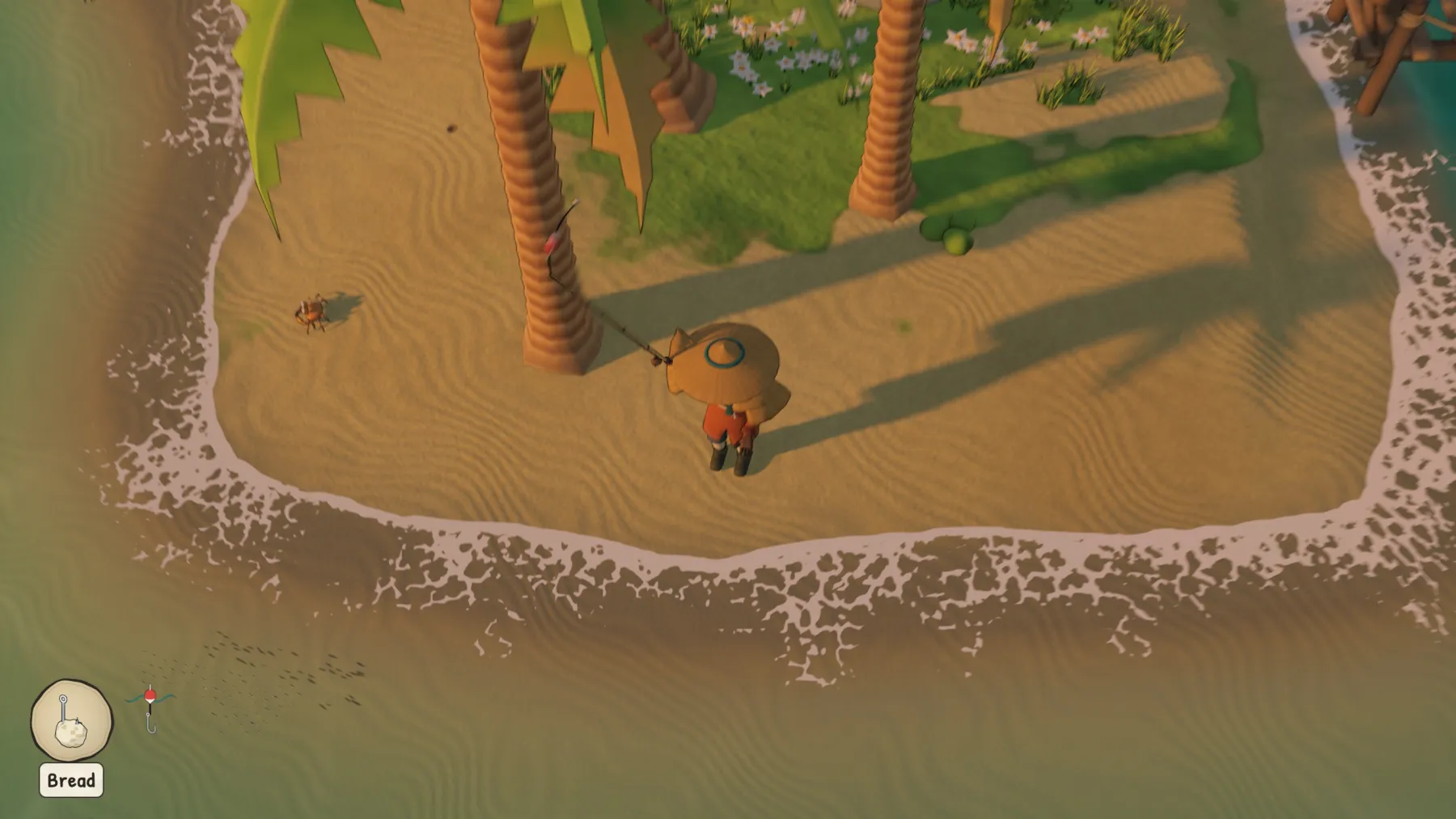
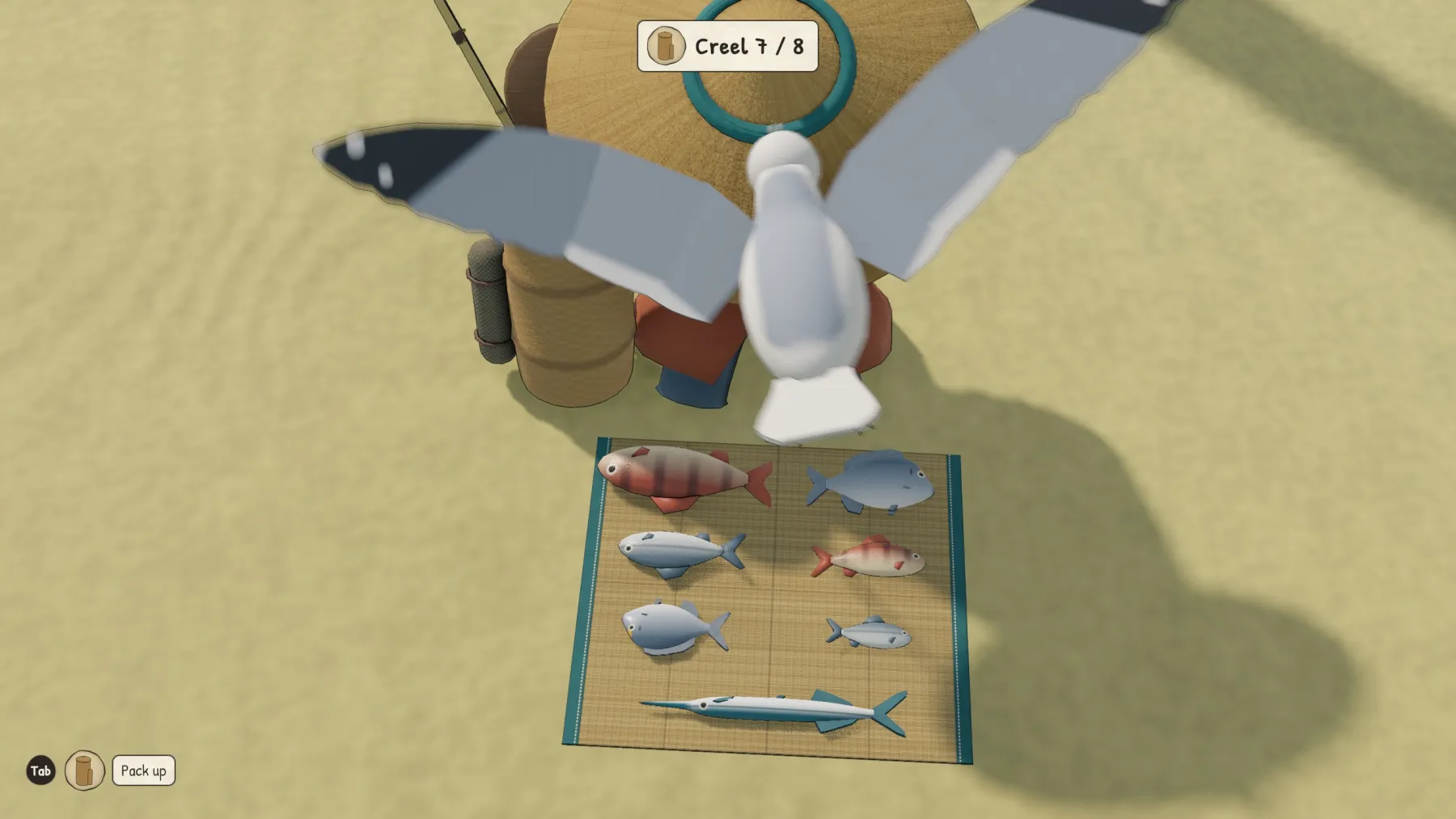
The game grows into a light RPG on a gated island, and a free demo is coming soon. Below is the process he uses for every feature, mostly following the crab, which went from brief to beach in one afternoon.
The setup
One Claude Code session drives two editors: Blender 5.2 through MCP for Blender, and Unity 6 (HDRP) through Unity MCP. Fork Dev does the game design and the level design. Claude builds, and he plays what it builds.
He places, copies and scales the rocks and props in Unity himself, and after each pass Claude regenerates whatever depends on the layout: the shore foam, the plants, the crab burrows. He also decides how the island opens up. For now that's a fallen tree, a rockfall and a broken bridge, with story gates like a mosquito-filled swamp planned for later.
Everything runs on free tools: Blender, Unity, Cycles for baking, and CC0 sounds from Freesound trimmed by a script.
Brief one feature at a time
He works on one feature at a time. Each has a short PLAN.md in the repo with its decisions and status, so typing "continue with the crabs" in a new session picks up where the last one stopped. When a real design decision comes up, Claude asks him as a short multiple-choice question. That's how the town's stonemasons became the ones who clear the rockfall.
Briefs are short. One afternoon in late September, he sent Claude two photos of beach crabs, a doodle from his tablet and a four-sentence brief. The crabs should wander by the water. Get too close and they startle, cute and a bit over the top, then dash into the sea or a burrow. He wanted subtle burrows, and bubbles in the water if possible.
References come with a note on what to take from them, and a reminder that the game's own style wins.
MCP for Blender builds every asset as scripts
MCP for Blender built the crab part by part, painted it in three colour variants, animated 18 clips (idle, walk, scare, burrow, peek and more) and set it up in Unity. Model, rig, paint, animate, export: each step is its own script, run in order, with one more in Unity to set the crab up. To rebuild it from nothing, you run them again.
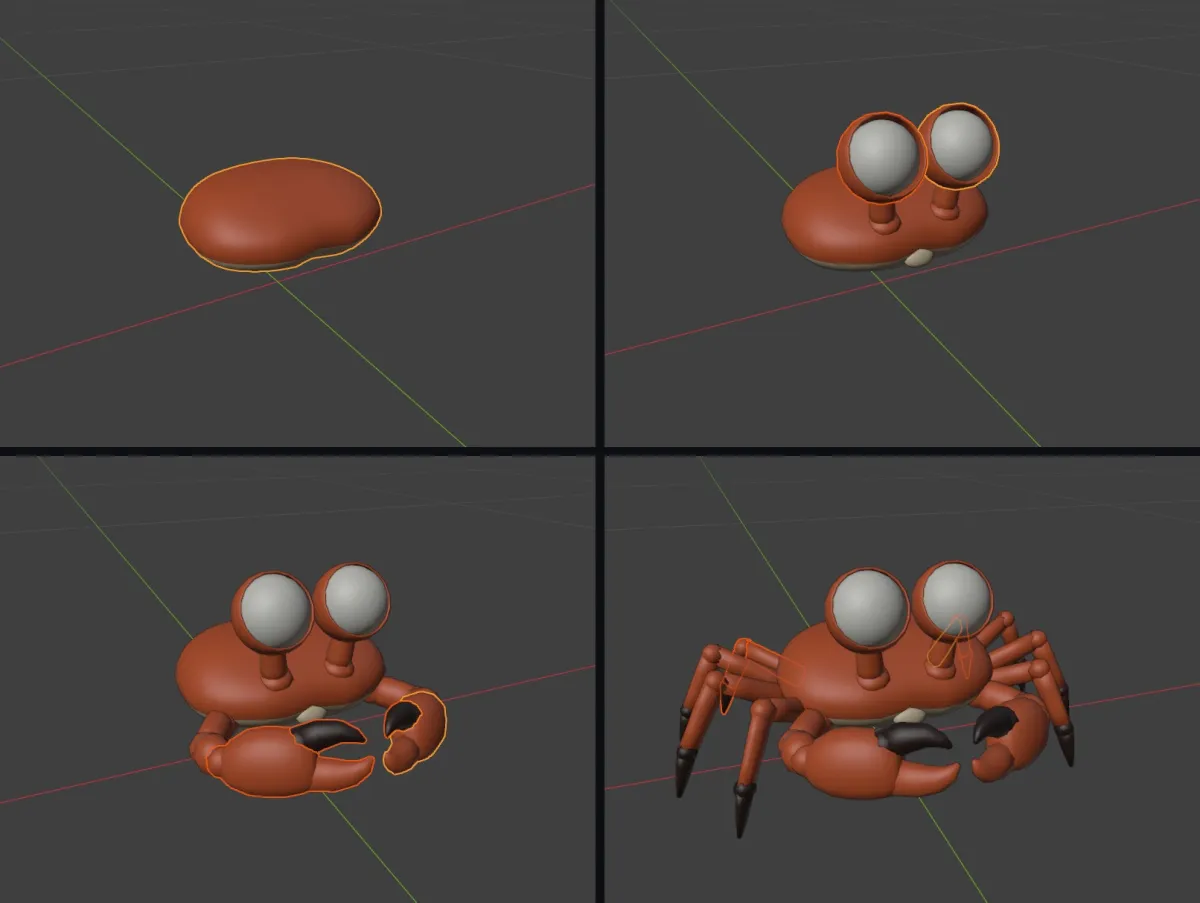 Model
Model build_crab.py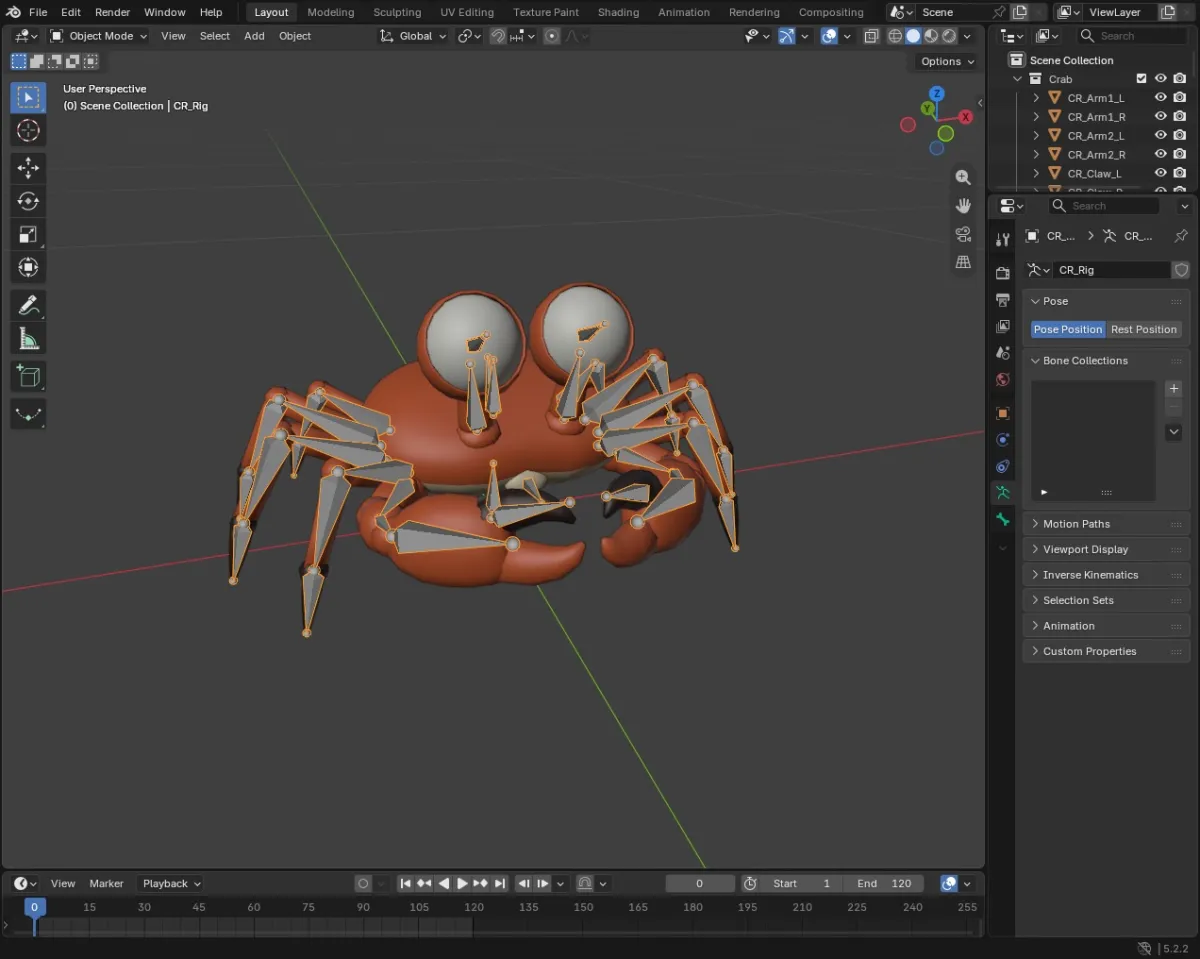 Rig
Rig rig_crab.py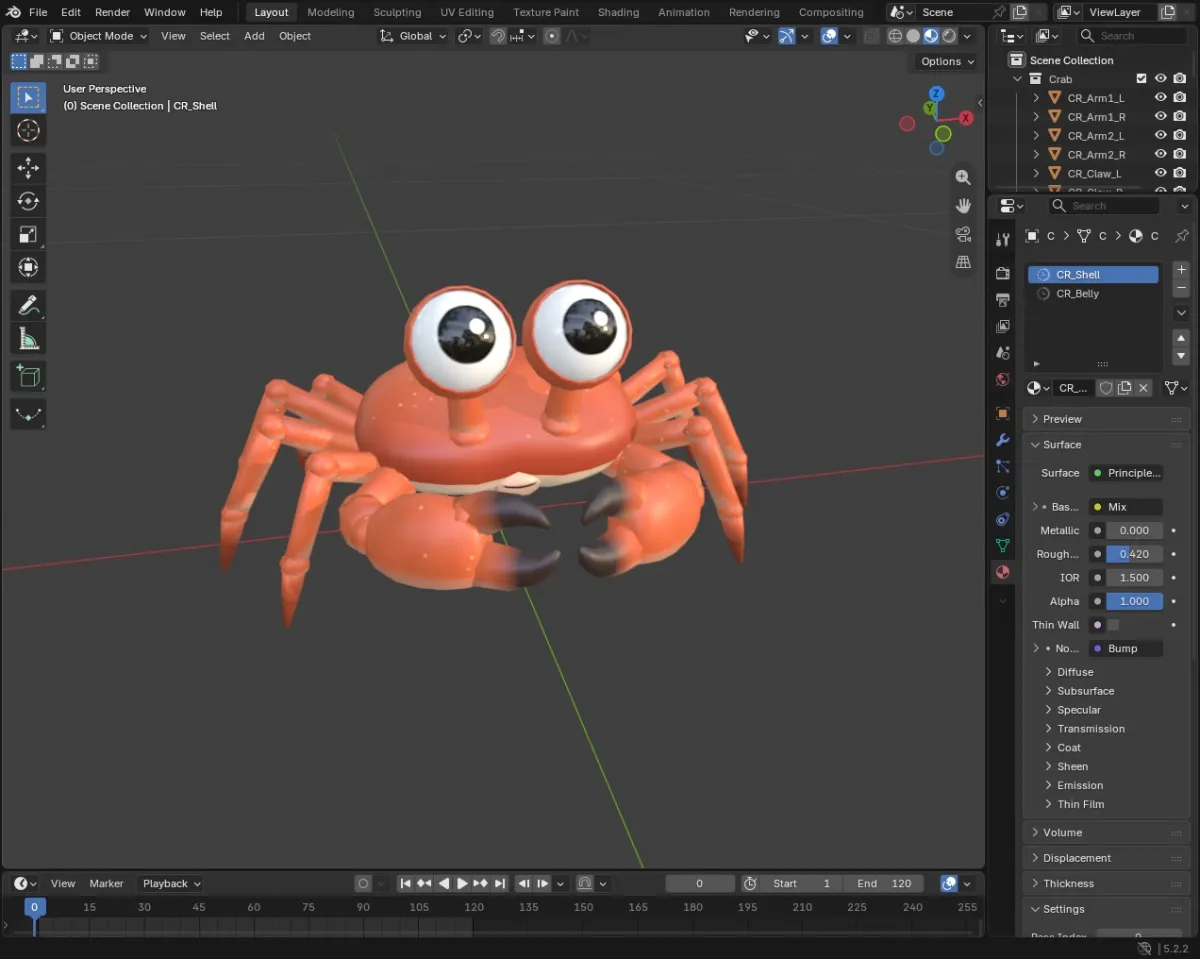 Paint
Paint bake_crab.py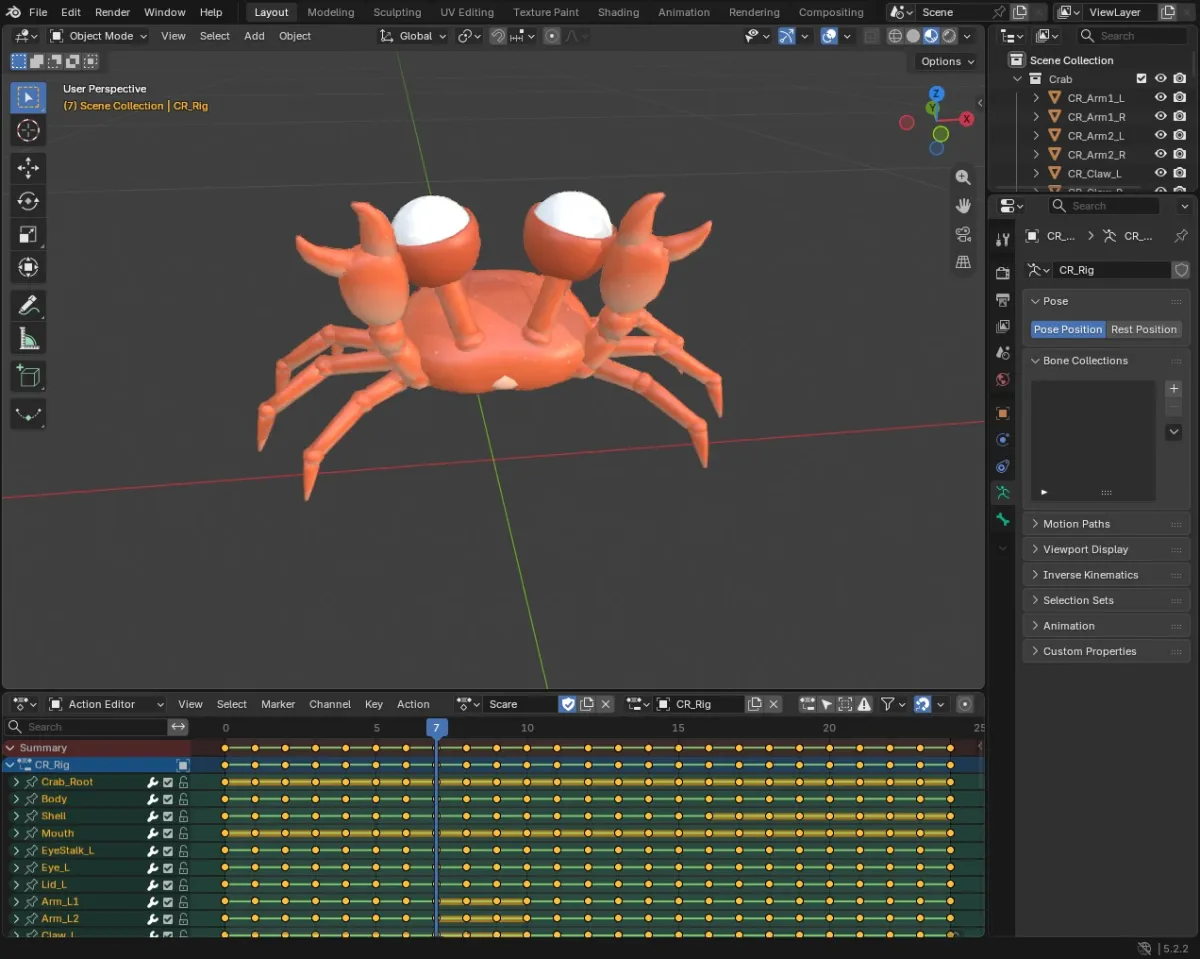 Animate
 anim_crab.py| Step | Script | What it makes |
|---|---|---|
| Model | build_crab.py (308 lines) | 40 rigid parts, 6,452 triangles, right side mirrored from the left |
| Rig | rig_crab.py | 42 bones taken from the parts' own frames |
| Paint | bake_crab.py | Painted procedural materials baked in Cycles to one 1024 atlas, 3 colour variants |
| Animate | anim_crab.py | 18 clips; legs by IK, claws from preset poses |
| Export | export_crab.py | One FBX with rig, skinned mesh and every clip |
| Set up | CrabSetup.cs (Unity) | Import, animator, prefab, materials, sounds, burrows on the beach |
So "bigger claws" means changing a number and rerunning. Nobody remodels anything, and every change sits in git history.
Most people use MCP for Blender to make one object at a time. Here one session models, rigs, paints, bakes, animates and exports, then imports the FBX into Unity and builds the prefab. The hut, the palms and the fisherman are scripts too.
MCP for Blender checks its own work first
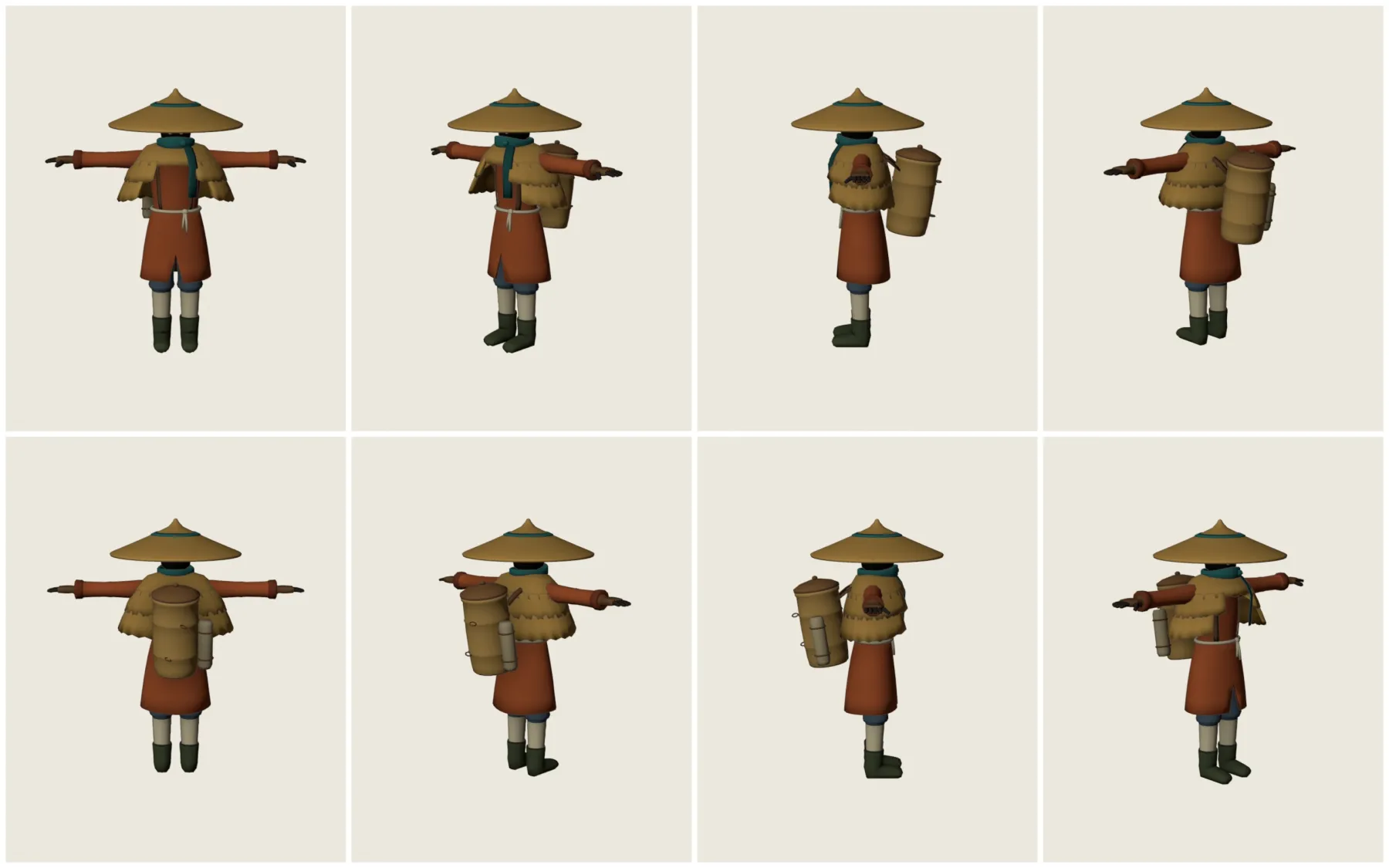
MCP for Blender checks looks by rendering each model from below, from behind and from the game camera. On the crab, those renders caught two problems before Fork Dev looked at anything. From the game camera, the eyelids made the crab look sleepy, and the claws stuck forward like arms. MCP for Blender rebuilt the lids and folded the claws.
It checks behaviour in Unity with scripted play tests that drive the keyboard and mouse from code and record frames and logs. Nothing gets pushed until Fork Dev has played it.
Fork Dev plays it and sends notes
He judges each feature by playing it, not by watching recorded clips. Fifty-three minutes after his crab brief, crabs were walking on the beach. He played it and sent two notes.
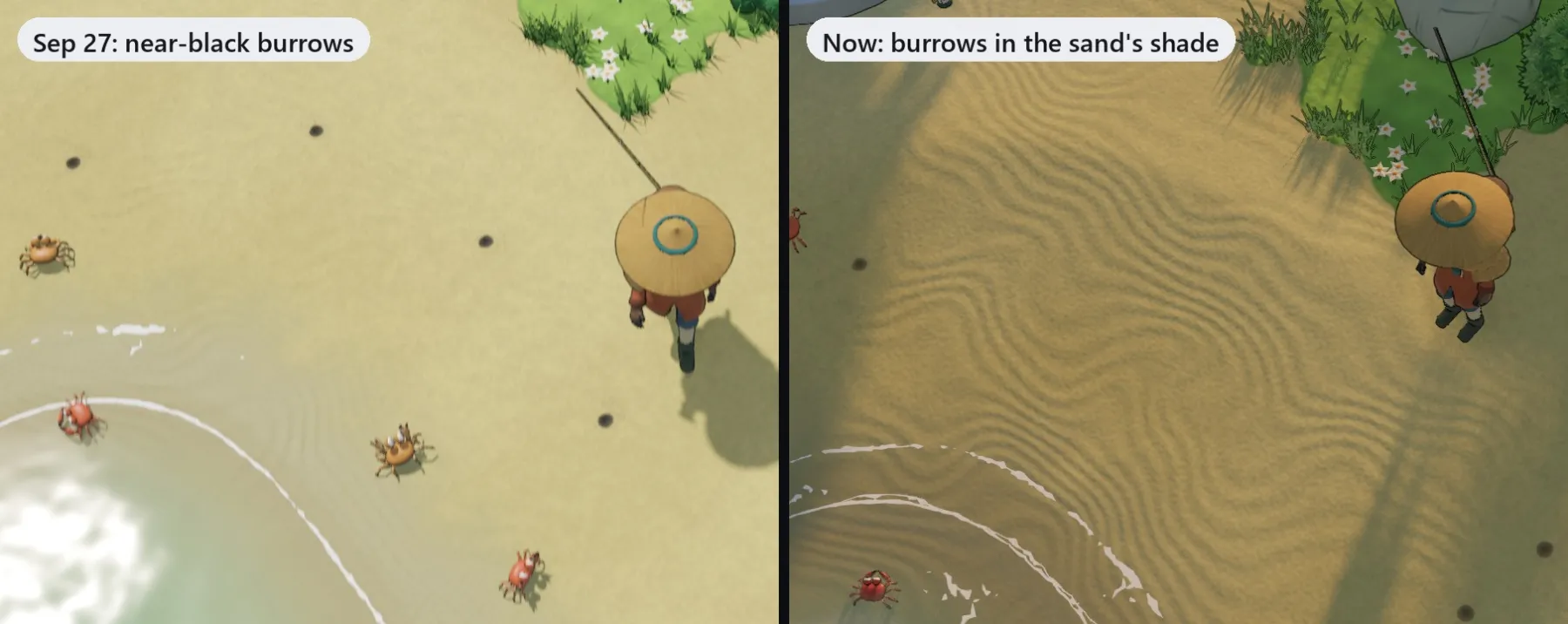
First: too many crabs, and the burrows were too dark. Sixteen crabs became eight, and the holes went from near-black (#4A3B29) to the sand's colour in shadow (#978458). Claude added crab sounds from CC0 recordings on Freesound in the same pass. Second: the crabs were halved but the burrows weren't. A few minutes later there was one burrow per crab, committed and pushed.
- 53 min
- from the brief to crabs on the beach
- 3
- messages from Fork Dev
- < 2 h
- from the brief to the finished build
A later play session turned up a problem no render would show. Chase a crab and it ran for its hole anyway, then got dragged metres into it like a rubber band. Now crabs re-plan while they run: their hole if they can reach it, else the water, else anywhere away from you.
He gets better results describing how something should feel than writing build instructions. "The leaves darken as I walk" was enough for Claude to find the cause: leaf cards shading each other in the sun's shadow map. "The crowns wobble like heat haze" turned into trees that sway as one piece.
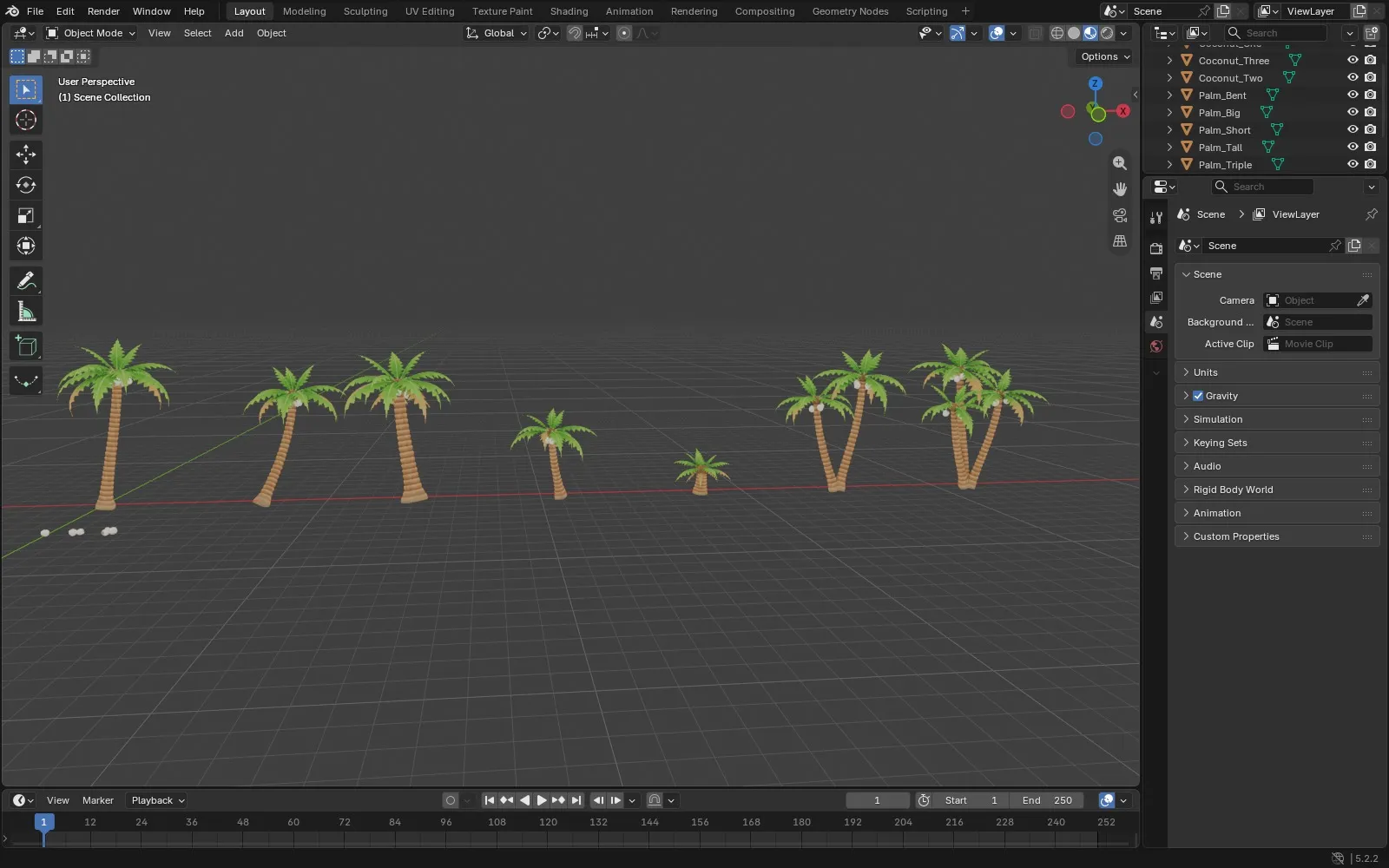
Claude usually gets a model right first time. When it doesn't, two or three rounds of feedback fix it.
Fixes go back to Blender
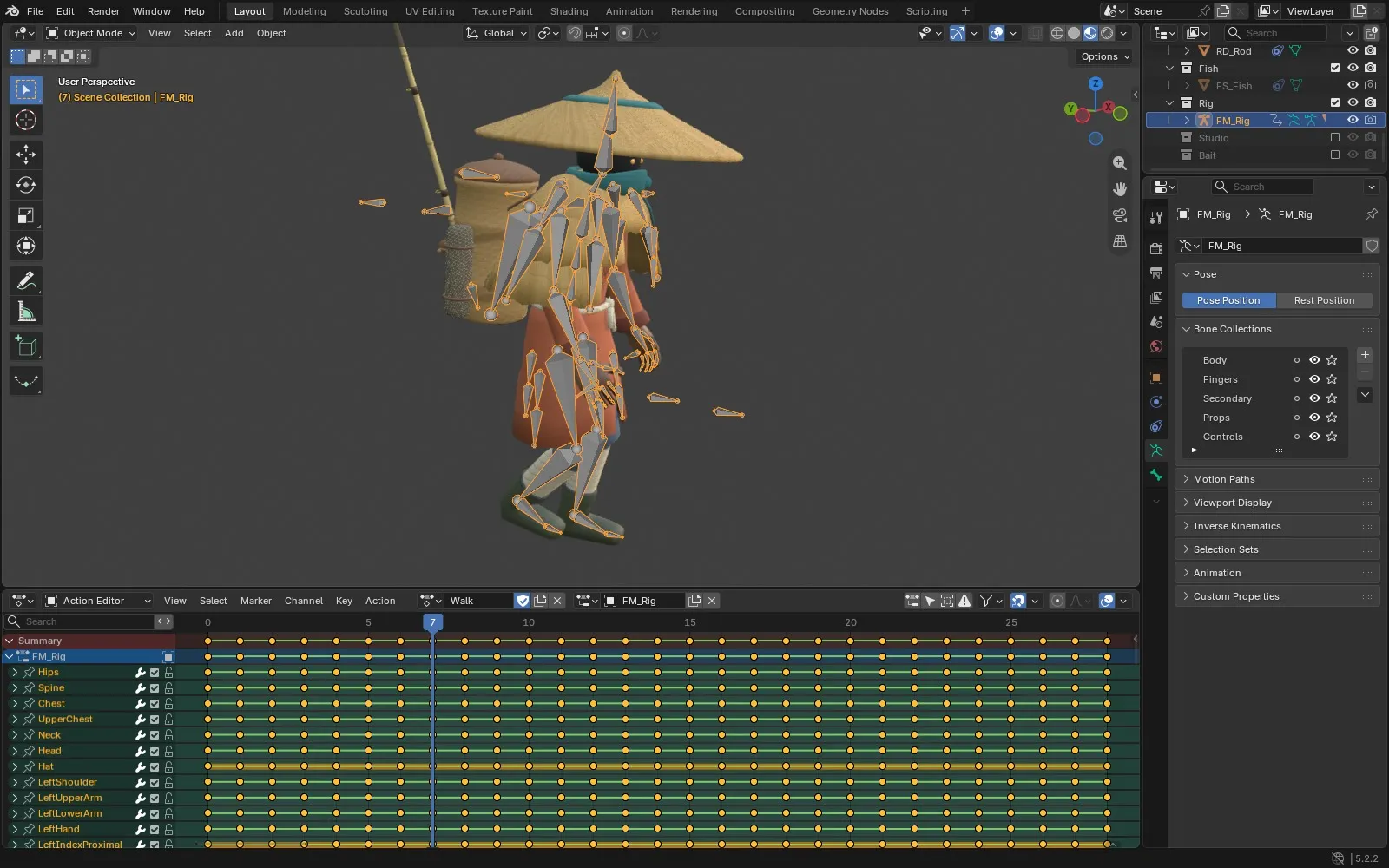
Bugs found in Unity get fixed in Blender. In one play test the fisherman's hand flipped around the rod during fast animations, because Unity's Humanoid retargeting wraps extreme wrist poses. Claude gave the rod its own bone in the Blender rig, and Unity now puts the hand on it with IK. A black patch on his scarf turned out to be ambient occlusion from neighbouring parts in the bake. The scarf now bakes on its own.
Data goes back too. Fork Dev lays out the island by hand in Unity, so the ground only exists there. When Claude built the stilt hut, it had Unity sample the island's colliders every 6.25 cm around the site. Back in Blender, hut.py read those heights and the coral reef positions. Every post under the hut and its 20 m dock stands on the sand or seabed and misses the corals. The fallen tree and the rockfall that block parts of the island were fitted to the ground the same way.
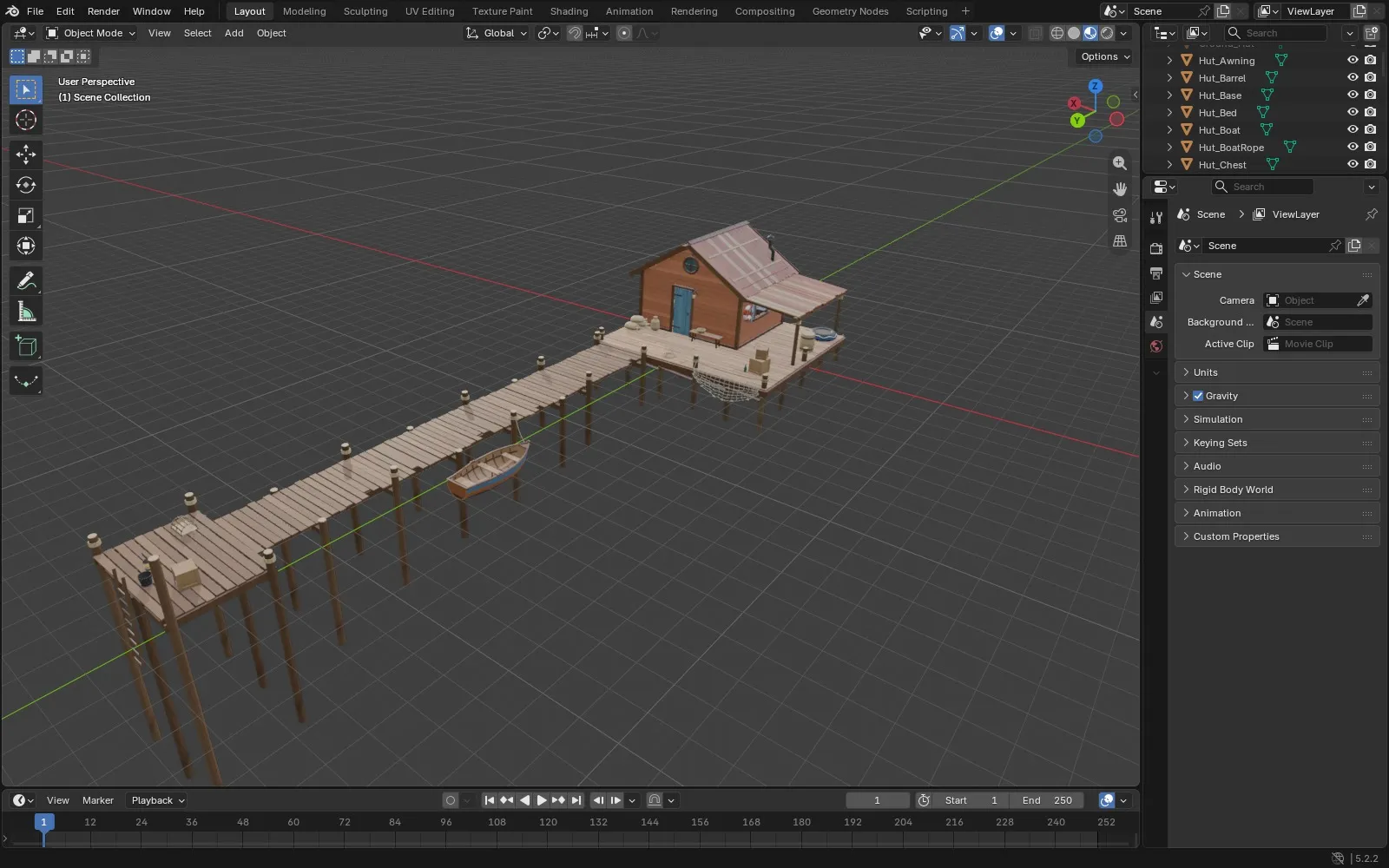 Blender ·
 hut.py on an empty grid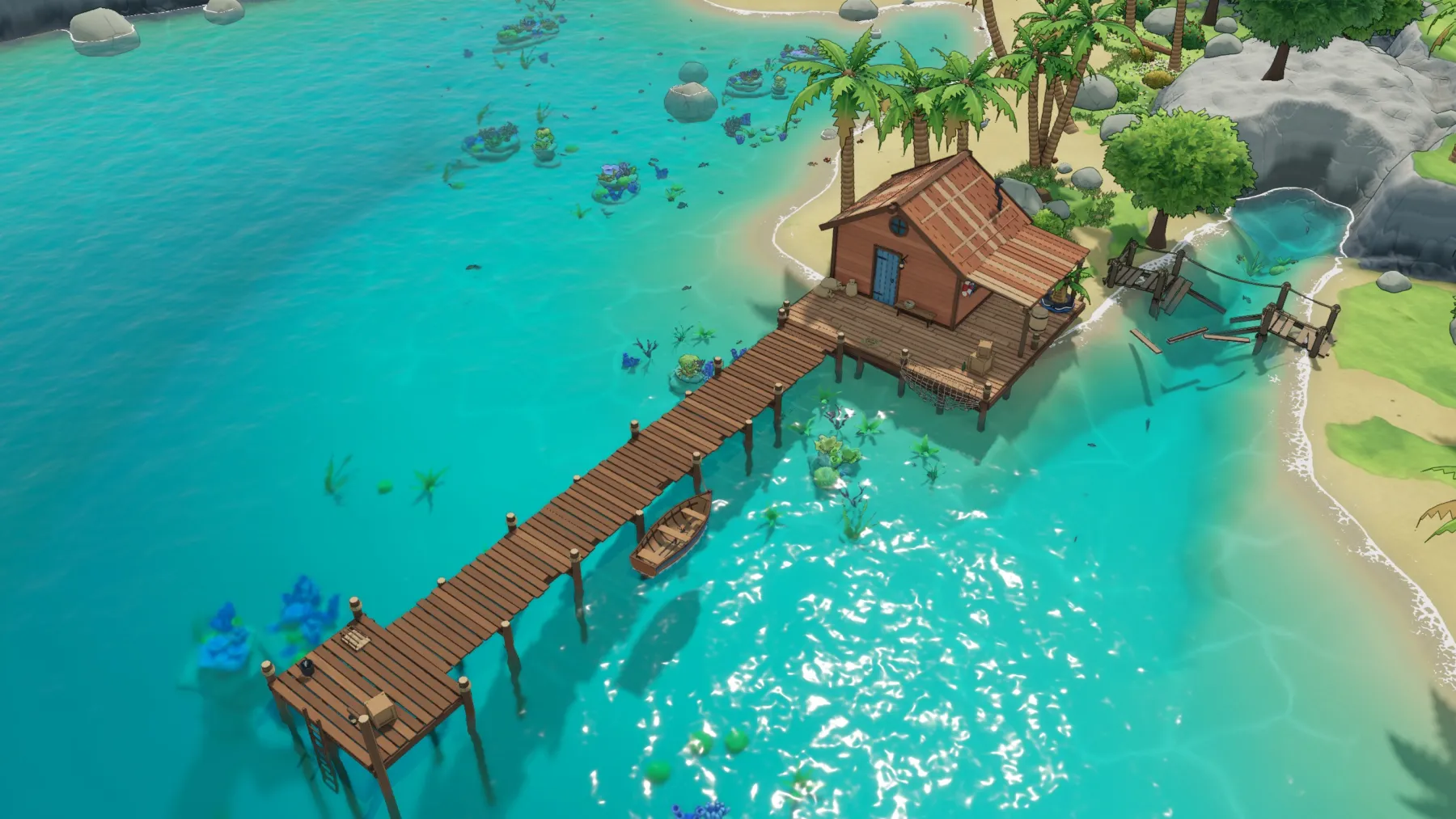 Unity · the hut's bay from above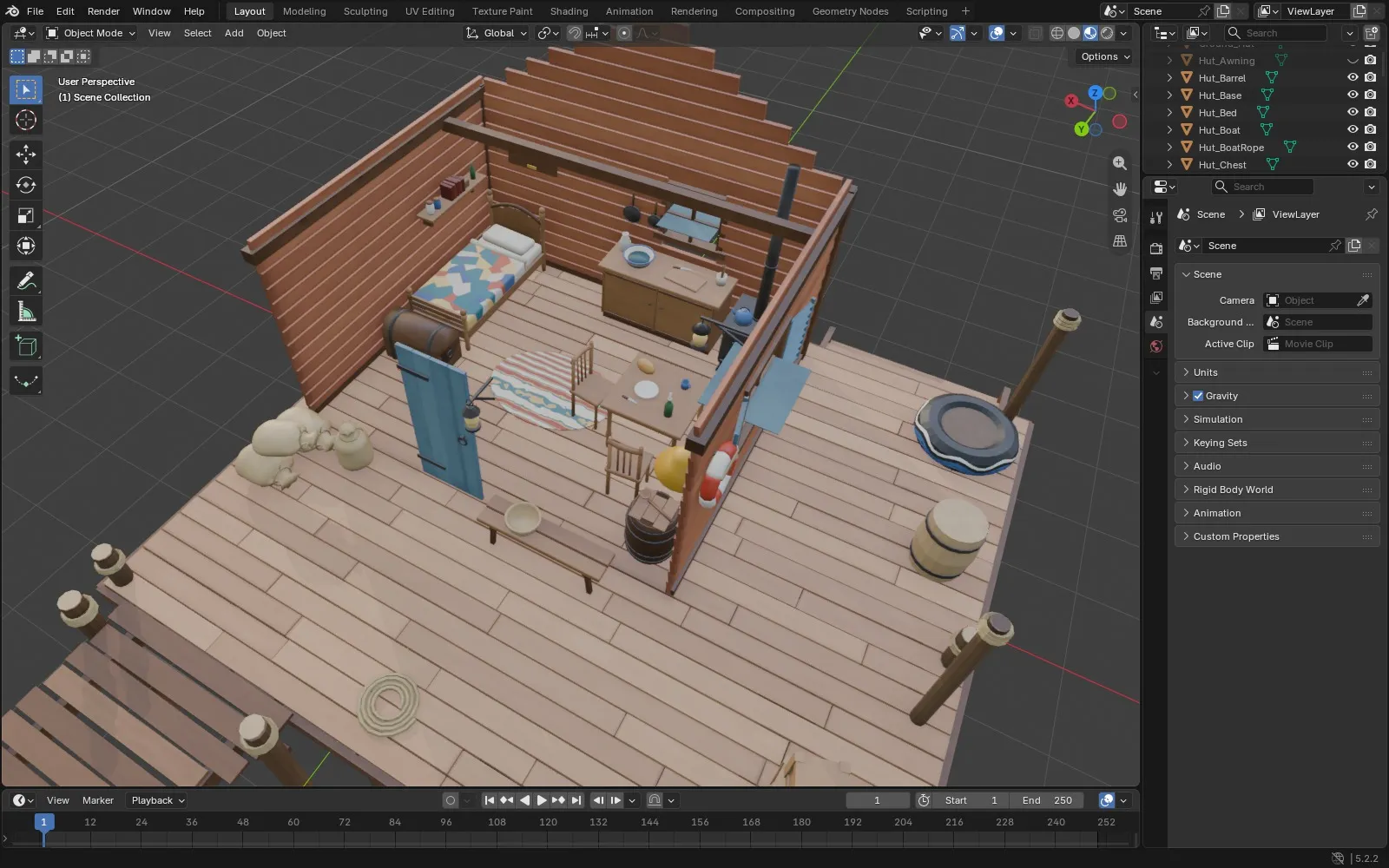
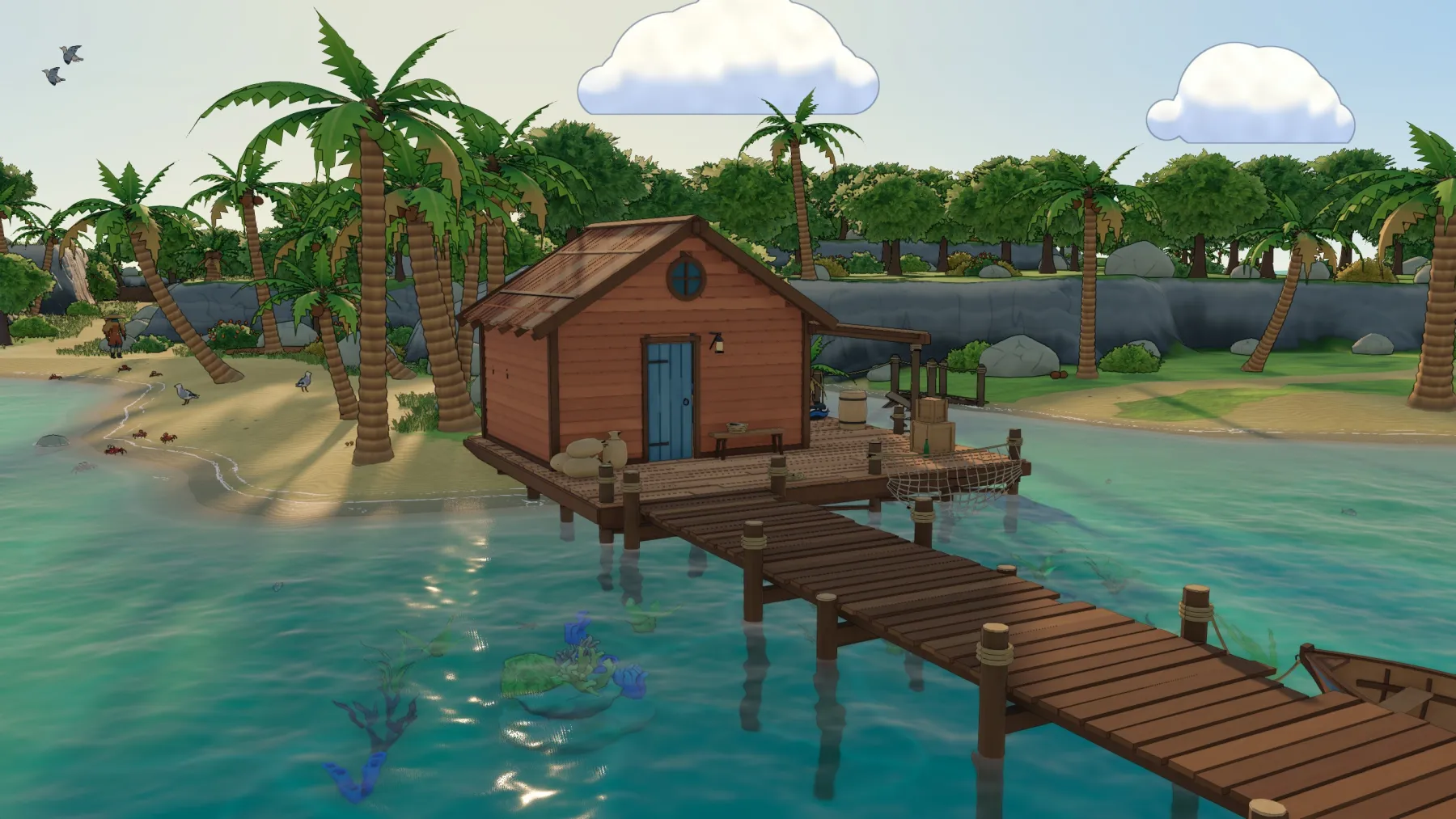
Designing around what scripts can't do
Scripted modelling can't produce complex smooth shapes like a realistic face or an anime-style character. It can hint at one with simple shapes, and that's as far as it goes.
Fork Dev stopped trying to push past that. He built the art style around what scripts do well: simple geometric shapes, one consistent finish, painted textures and ink outlines. The fisherman's face is a dark shadow under a straw hat with two small eyes, and it reads fine from the top-down camera. He says the look gave the game its own character, and that it turned out great.
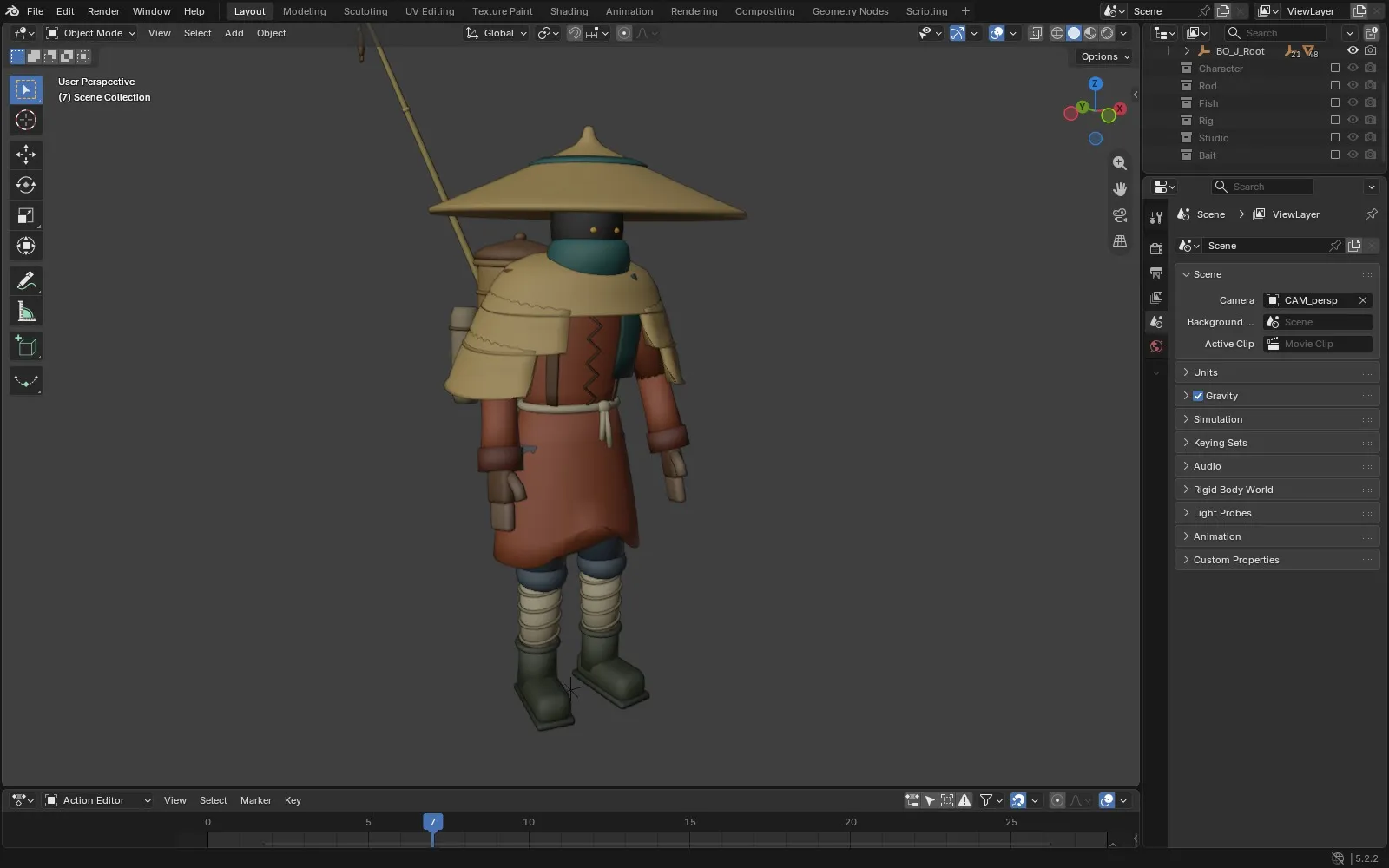 Blockout
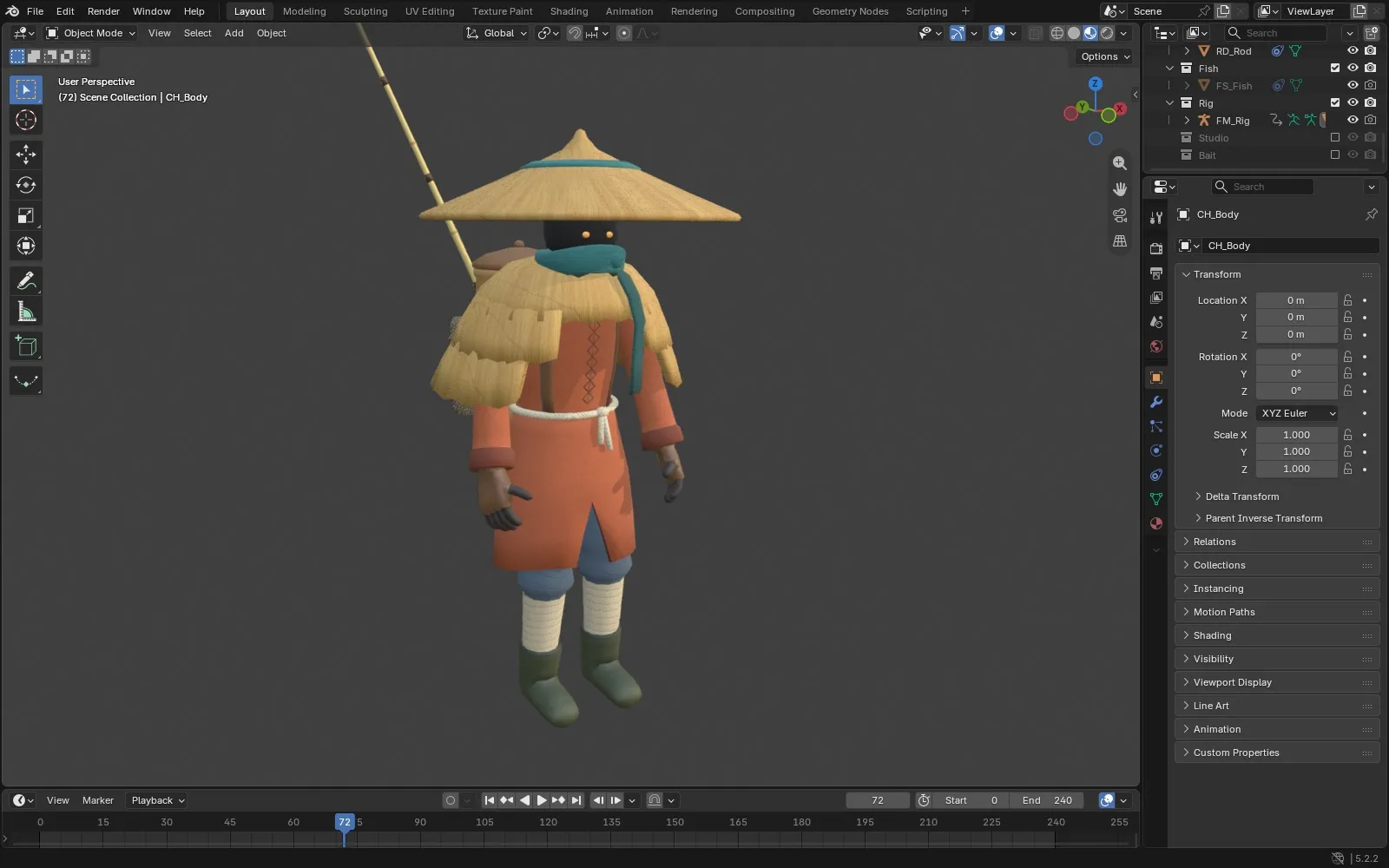 Finished model
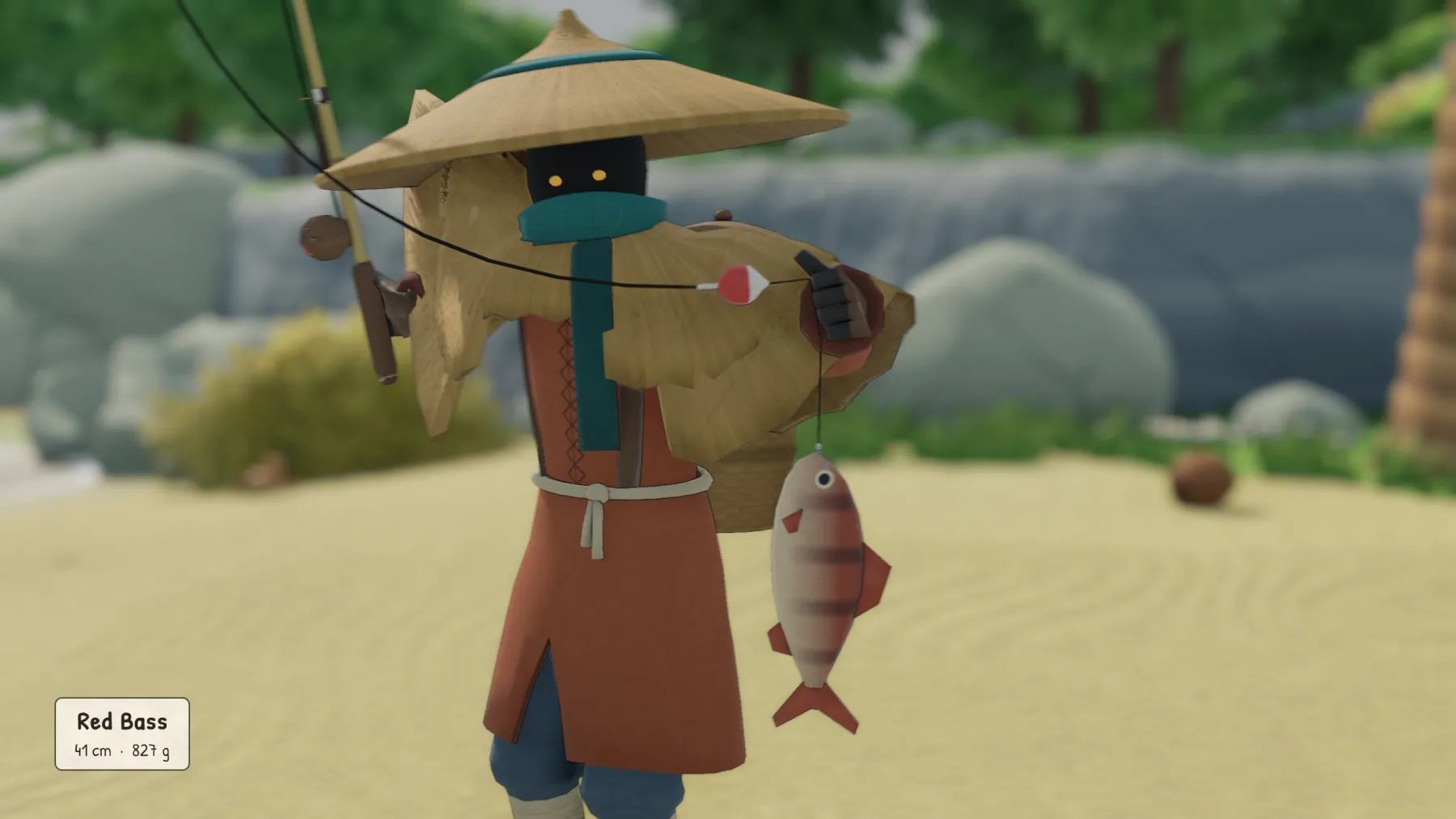 In the game
The models also came out lean, more so once Claude knew they were for a game.
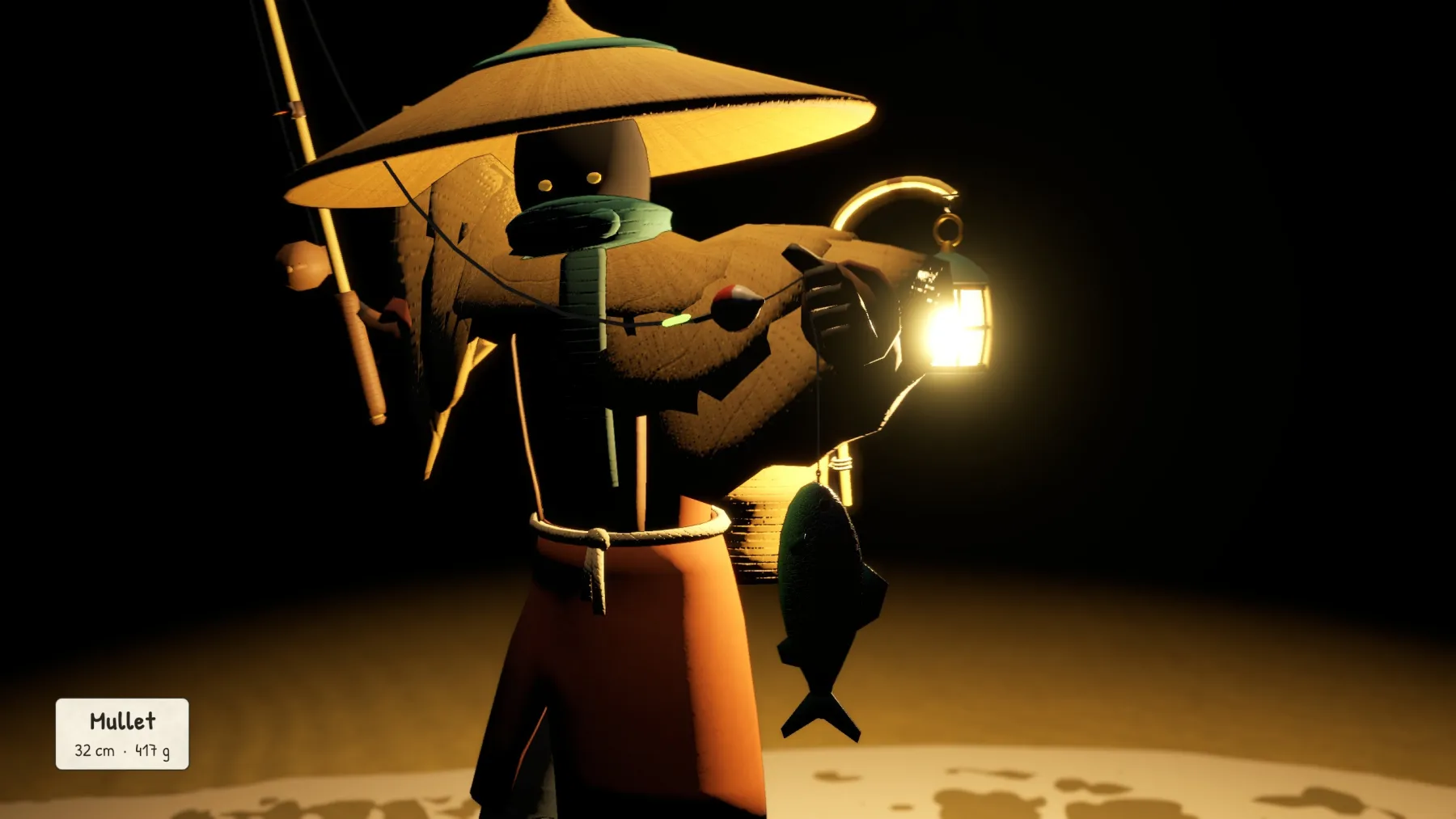
Gotchas
Traps Fork Dev hit moving work between Blender and Unity:
- Long bakesA Cycles bake can run longer than one MCP call allows. Run long bakes in a background Blender process.
- Material orderUnity numbers submeshes by the first face of each material. Sort faces by material before exporting a joined mesh, or the materials swap.
- Ambient occlusionJoined parts, or two models at the same origin, shade each other black. Bake part by part.
- Thin UV islandsIslands smaller than a texel bake black. Fill the unbaked texels afterwards.
- Humanoid wristsUnity's retargeting wraps extreme wrist poses. Give held props their own bone.
- AxesPick the Blender-to-Unity axis mapping once and keep it in one shared export script.
- Flipped faces and z-fightingReview renders from several angles catch these before they reach the game.